AI in Europe
with Michiel Bakker (MIT), moderated by Stephanie Chan
A discussion of Europe’s place in AI development, the Europe 2031 scenario, and what Europe can do to change course.
We host conversations for AI staff thinking through the public responsibilities that come with building and deploying frontier AI systems. These events bring historical perspective, policy context, and outside expertise into a space for staff to learn and reflect in their personal capacities.
with Michiel Bakker (MIT), moderated by Stephanie Chan
A discussion of Europe’s place in AI development, the Europe 2031 scenario, and what Europe can do to change course.
with Kwan-Yee, Gabriel, and Erik from Concordia AI
Authors of Concordia AI’s 2026 report presented their findings on AI safety and governance in China, followed by questions and discussion about international coordination.
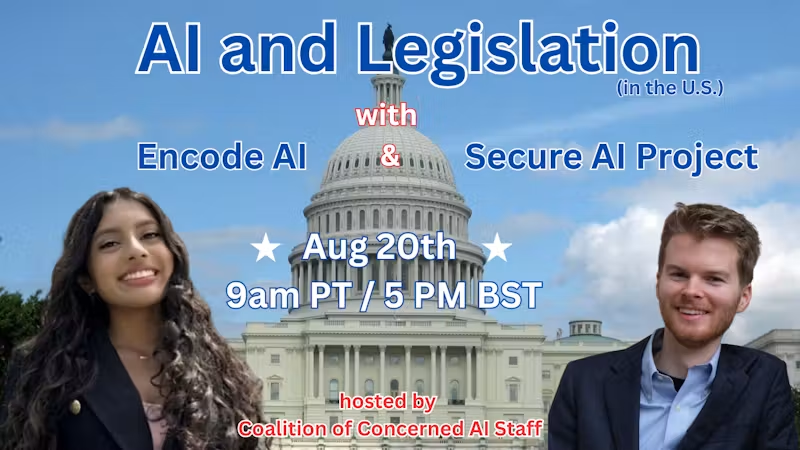
with Sneha Revanur (Encode AI) and Thomas Woodside (Secure AI Project)
A conversation about AI legislation, the role AI companies have played, and how employees can make a difference. Sneha Revanur and Thomas Woodside brought their experience writing, analyzing, and helping pass AI bills to a discussion of how staff can contribute to policymaking.
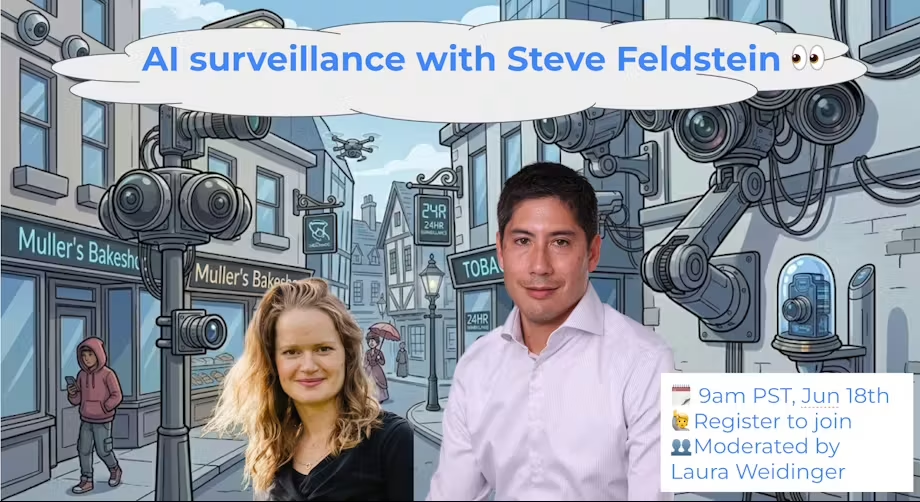
A conversation with Steve Feldstein, senior fellow at the Carnegie Endowment for International Peace. Steve Feldstein is a world expert on the role of AI in surveillance, warfare, state oppression, and democratic governance. He has documented and written extensively about technologically-enabled repression around the world. Moderated by Laura Weidinger.

with Molly Kinder, Alex Imas, Andrea Dehlendorf, Pamela Mishkin
A conversation bringing together researchers and organizers thinking about the intersection of work and AI. Molly Kinder opened with an overview of the current state of policy and research, followed by a Q&A with the guest experts facilitated by Pamela Mishkin.
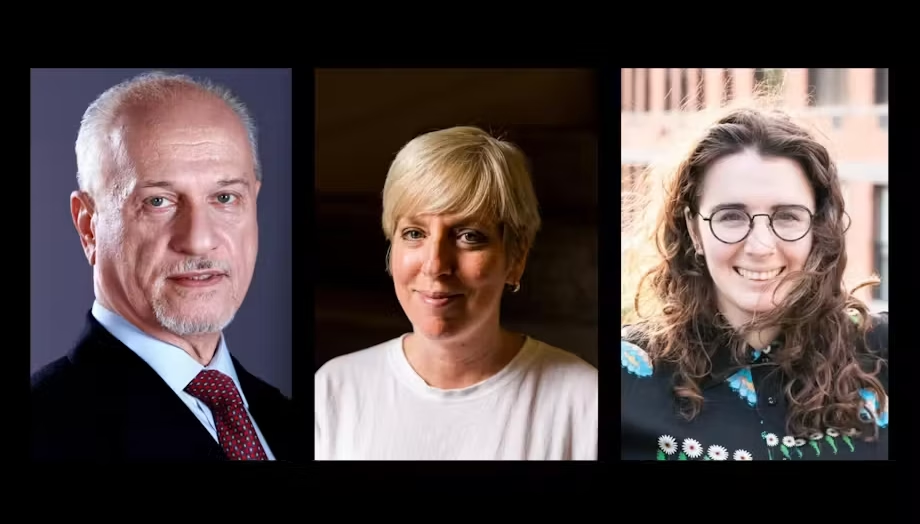
with Dr. Hussain Al-Shahristani (President of Pugwash) and Sandra Butcher (a Pugwash historian)
The Pugwash Conferences have been a powerful force for international peacebuilding and nuclear disarmament, earning the Nobel Peace Prize in 1995. Pugwash pioneered “dialogue across divides” and built the scientific groundwork for shaping nuclear arms control. What are the lessons for AI developers today? Dr. Al-Shahristani is a scientist and statesman from Iraq. In 1979, he refused to collaborate on building a nuclear weapon for Saddam Hussein’s government, and was consequently imprisoned for eleven years. Hosted by Prof. Kim Stachenfeld.
Read Dr. Al-Shahristani’s address: “Ethical Responsibilities in the Age of Artificial Intelligence”Further resources:
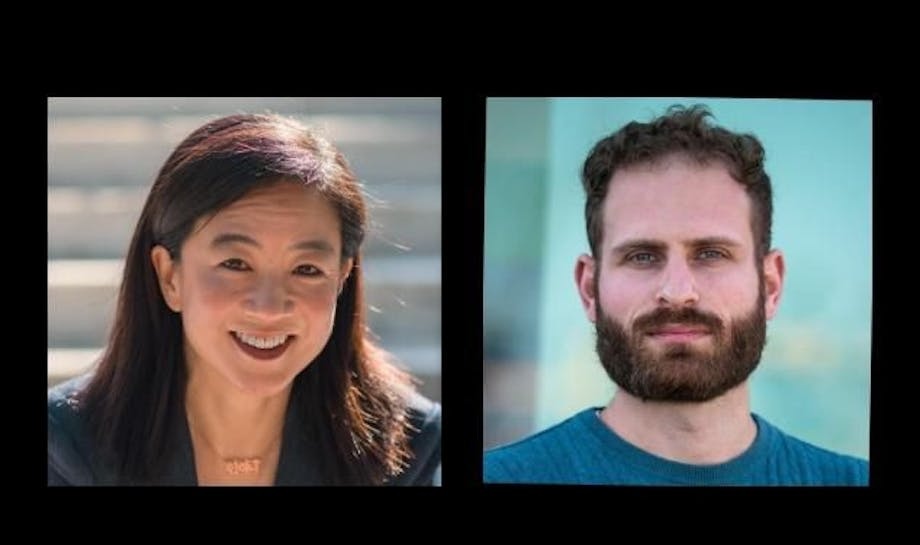
A conversation with Dr. Hahrie Han, professor of political science at Johns Hopkins. Dr. Han is a leading scholar of social movements and political engagement. What does it take to build movements that create lasting change, and what might those lessons mean for frontier AI developers today? Hosted by Joshua Batson.
Further resources: